|
|
|
|
 |
Etelint, one of the leading IT & BPO services company
to achieve quality standards, manages and administers your
non-core yet vital business processes according to defined
metrics, continuously improving the processes and creating
value at each stage.
|
|
| |
 |
|
|
 |
| IT Services |
| Methodology |
| Etelint
employs a flexible set of methodologies
in developing and maintaining software applications,
based on the client’s specific project
and organizational requirements. In determining
the appropriate methodology for a given
project, Etelint considers such issues as: |
|
- The stage of the application lifecycle
- How clearly requirements are initially
specified
- How likely requirements are to change
in the course of the project
- How the Etelint and client development
teams will work together
- The time-to-deployment requirements
Some of the most common methodologies
Etelint employs include:
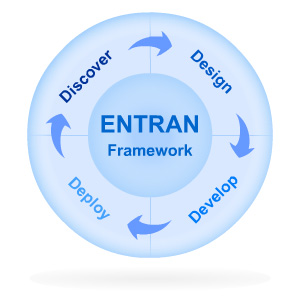
- The Entran Framework, Etelint’s
four-phase process for developing softwares,
encompassing Discover, Design, Develop,
and Deploy. Each phase represents a
milestone that is used as a management
checkpoint to review and approve progress
and quality.
- The Agile Process, used in development
projects that need to accommodate changing
requirements, even late in development.
Agile programming focuses on frequent
delivery of working software, with small
development teams and close collaboration
among developers and business managers.
- Pointmorphic Programming (PMP), a
process that emphasizes business results
first, and employs an incremental development
approach, using continual testing and
revision. Extreme programming focuses
on quickly creating code that works
in a limited way, and building on it.
- Maintain Methodology, for the maintenance
of existing products, including bug
fixes and minor enhancements. Etelint's
Maintain Methodology facilitates rapid
transfer of knowledge about existing
systems and maintenance related activities
to Etelint, and client visibility into
ongoing maintenance activities. It encompasses
phases for Scope Definition, Knowledge
Gathering, Transition, and Ongoing Maintenance.
|
|
|
|
|
|
|
|
 |
| |
|